Showing posts with label non-fiction. Show all posts

Wednesday, May 29, 2024

Book Review: I Sleep Around by Sue Ann Jaffarian

Stars: 5 out of 5
Pros: Fun yet realistic look at living life on the road in a van
Cons: I’m only reading about it, not trying it first hand
The Bottom Line:
Living on the road
Read about the ups and downs
Makes me want to go


Honest Look at Van Life

I’ve read many of Sue Ann Jaffarian’s mysteries over the years, and I blame her friendship for my love of mud runs and my increased listening to audiobooks over the last couple of years.  I was anxious to see more about her life since she took to the road in her Winnebago Travato Class B RV after she retired from her job as a paralegal here in Southern California.  That’s the subject of her memoir, I Sleep Around.  I’m not at all surprised to say I enjoyed it.

The book really does break itself down into three parts.  It starts with Sue Ann’s decision to hit the road full time after she retired and her planning for her new life on the road.  Included in this section are many practical tips for those who might be considering such a lifestyle themselves.  This is far from an exhaustive list of what to consider, but it is a great place to start.

From there, the book goes into her first year on the road, from the rough start to the joys and new friends she made along the way.  Sue Ann is honest about her struggles and her triumphs as she sees just what her new life entails.  She shares some of the wisdom she’s gained along the way, too.

When Sue Ann originally envisioned this book, she planned to stop at the end of the first year.  That changed, however.  You see, she retired at the very end of 2018, so her first year on the road was 2019.  Yes, in the final section of the book, she does talk about her experiences living on the road during the pandemic.  This is a short section of the book, and I would include her wrap up thoughts in this section.

I’ll admit, when Sue Ann first announced her post retirement plans, I was one of the friends she talks about in the book who was a little skeptical.  Mainly because this life seemed very out of character for her.  But a large part of me was very jealous because it sounds fun to me.  And my skepticism quickly melted away as she began to work toward her goals.  As a result, it thrilled my heart to read this book and see just how much she is loving her life on the road.

At times, I wish she had spent a little more time talking about some of the places she visited along the way.  Even so, this book will give you wanderlust, and I loved what we got about some of her stops along the way – places I now want to visit.  If I can’t be out there in person, I can at least enjoy the virtual visits, right?

As I said before, Sue Ann is very honest about the struggles of life on the road as well.  While most of the people she meets are wonderful, she has met a few not so nice people along the way.  Fortunately, nothing dangerous.  But she has encountered some dangerous weather and some frustrating mechanical failures.  This book doesn’t sugar coat what her new life is like.  But it also doesn’t dwell on those problems.  Her joy in her new adventure comes through.  She just wants to be honest for anyone considering the life like she is now living.

If you want a realistic look at life on the road, you’ll be glad you picked up I Sleep Around.  I only wish I could head out and try this life for myself right now.  Sadly, I have to keep working – at least for now.

NOTE: I received an ARC of this book.

Tuesday, February 21, 2023

Book Review: Life on the Mississippi by Rinker Buck

Stars: 3 out of 5
Pros: The travelogue parts are fun
Cons: Didn’t need so much personal history; smug tone; needless politics
The Bottom Line:
Boating down river
Some interesting stories
Drowned with politics


Book Wanders Like a River – Not Always for the Best

When I first heard about Life on the Mississippi, I knew I wanted to read it.  The story of a man who rafted down the Mississippi?  That’s the kind of thing I dream of, so I figured I’d really enjoy the book.  Sadly, it’s wasn’t as good as I’d hoped it would be.

I was not familiar with author Rinker Buck’s other books, but this isn’t the first time his love of history has compelled him to experience something from the United States’ past.  In this case, he decides to build a flatboat and take it on a journey down the Mississippi all the way to New Orleans.  This is a trip several years in the making as he studies up on what it will take to build the boat and safely navigate the river.  Along the way, he also studies up on this part of American history.  When he sets out with a revolving crew, he spends four months on the Ohio and Mississippi Rivers traveling a thousand miles.

Along with the story of his journey, we get history.  Lots of history.  Some of it I definitely found interesting, like when he talks about how much commerce was tied to the river and how early it was a key part of America’s economic life as a country.  I’ll admit, if I ever studied this in school, I’d forgotten about it.  However, these parts tend to go on and go into greater detail than I really wanted it to.  I was here for the adventure more than the history.

While Rinker was preparing for this adventure, he lost his mother.  We get passages about her and what a remarkable woman she was.  I’m sure they were cathartic for him to write, but I was left wondering exactly what they had to do with the story I picked up the book to read.

Then there’s the politics.  Yes, this book manages to work in politics.  A bit of it comes in naturally, like the discussion of the part the Mississippi played in the horrors of slavery.  However, it seemed like a stretch to talk about the removal of the Native Americans under President Jackson in relation to the Mississippi.

Much more than that, I’m talking about his subtle and not so subtle digs at people he met along the way.  He has several people who help him crew his boat, one of whom is *gasp* a conservative.  Several times, he marvels that the two of them became good friends despite the fact that the other guy was a conservative.  Honestly, that’s the kind of attitude that saddens me.  Can we no longer consider getting to know someone and becoming friends with them without politics being involved?  Another time, he marvels about being in a group setting and not hearing politics come up.  (Well, until this one guy….)  I can think of plenty of group settings I’ve been in where politics isn’t discussed.  It makes me wonder if Rinker is the guy who brings it up at parties.

I think part of why this rankled was the overall smugness and condescension that radiated off the page at times.  You can tell that Rinker thinks he is right and doesn’t see how anyone else could think about something another way.  And again, some of these discussions have nothing to do with the book at all.

Then there’s his attitude toward some of those who helped him.  I get it that he didn’t get along with them, and one sounded like bad news.  But I feel like he could have been more discreet with this part of the story.  I hope he at least change some of their names because if he didn’t, it’s going to come back to haunt him.  I’m wondering how one of his friendships will fair after what he wrote here, too.

I know, this is sounding like I didn’t like the book.  While obviously there were things I had issues with, I enjoyed other parts.  I never would have considered what it would take to boat down a major river, so reading about all the things Rinker and his crews encountered was enlightening.  The discussions about what he saw and some of the people he met along the way were fun.  I wish we’d gotten more of that and less of some of the other stuff.  But when we were in these passages, I got caught up in the book and wanted to drop everything and do this trip myself.  Never mind that I probably would die, like he was warned numerous times.  That was definitely my favorite running joke.

And I was impressed with how well Rinker rose to the challenges he met along the way.  I learned a lot about what it takes to do something like he did on a fully commercial river.  He is right to take pride in how well he handled those challenges and setbacks.

Obviously, the title is supposed to evoke Mark Twain’s famous book of the same name.  In this case, I feel like it is more marketing gimmick than anything else since we are at least two thirds of the way through the book before he sails onto the Mississippi.  We spend much more time on the Ohio River.  But a book called Life on the Ohio doesn’t have the same ring to it.

I’m not sorry I picked up Life on the Mississippi.  There really was much I enjoyed here.  But the parts I didn’t enjoy kept it from being the good read I wanted it to be.

Monday, December 12, 2022

Book Review: Christmas Past by Brian Earl

Stars: 4 out of 5
Pros: Interesting articles on Christmas traditions past and present
Cons: A few leave us with questions, a bit dry at times
The Bottom Line:
Christmas traditions
Come see how they have evolved
Interesting book


A Look at Christmas Traditions Past and Present

Have you ever wondered why we do what we do at Christmas?  I mean, so many traditions we just accept, but why did they start?  How have they changed over the years?  If I’ve got your attention, you’ll love Christmas Past by Brian Earl.  Given how much I love Christmas, you know I was intrigued when I heard about this book.

The book divides itself into four sections: Food and Drink, Characters and Entertainment, Sights and Sounds, and Society and Culture.  Each second has chapters that focus on one particular topic.  They can really be read as stand alones, and with twenty-six chapters, you could read one a day and finish up on Boxing Day.  No, the book doesn’t get into that mostly British holiday, but it does look at some former traditions like sugarplums, mince pies, and wassail.  We also find out the origins of Rudolph, both the character and the special.  We take a look at how Christmas lights evolved and how gift wrap got started.  We even discuss why we say “Merry Christmas.”

This book looks at Christmas purely from a secular celebration stand point.  Occasionally, it touches on the religious element of the holiday, most noticeably when talking about the carol “Silent Night.”  But, since the book is focusing on traditions and how we celebrate it, that’s fine with me.  I wasn’t expecting the religious aspect to be a focus when I picked up this book, so I wasn’t disappointed.

Some of the stories told are fascinating.  As I was reading the various chapters, I sometimes remembered things I’d heard over the years but forgotten.  Other times, I was surprised by what I was learning.  For example, he names a couple of popular Christmas set classic movies that were released in the summer.  What?  I did find the food section a little hard to get through, and I sometimes felt like I didn’t learn much other that supposition in those chapters.  The writing can be a little dry at times, too.  But overall, I learned some interesting trivia and I enjoyed it.

Brian Earl hosts the Christmas Past podcast.  I haven’t heard of it before or listened to it, but my understanding is that these chapters originated as episodes on his podcast.

I also enjoyed the chapter where he looks at modern Christmas trends and tries to predict if they will be long term traditions or modern trends that will come and go.  It will be interesting to see if his predictions come true or not.

Each chapter also includes black and white photos, some of them vintage, showing how the topic under discussion has changed over the years.

There’s plenty more he didn’t touch upon here.  But the topics in Christmas Past are sure to spark the interest of anyone who loves Christmas.  And isn’t that the majority of people this time of year?

Thursday, February 24, 2022

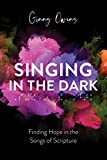
Book Review: Singing in the Dark by Ginny Owens

Stars: 5 out of 5
Pros: Scriptural encouragement for all seasons
Cons: Didn’t hit any sour notes for me
The Bottom Line:
Singing to our God
Through all the seasons of life
Encouraging book


Speaking, and Singing, Hope into the Darkness

In the late 1990’s, I was in love with a record label.  Rocketown Records released music by several artists that quickly became favorites, and Ginny Owens was one of them.  While I didn’t keep up with her career after the label folded (but I’m fixing that), I was very intrigued when I saw she’d written a book.  I had to get Singing in the Dark, and I’m so glad I did.

If you are not familiar with Ginny, she is a singer-songwriter who also happens to be blind.  Her lyrics have always spoken to me, and I expected nothing less from this book.

The sub-title of the book is Finding Hope in the Songs of Scripture, so I was expecting a book focused on the Psalms.  Makes sense, right?  However, Ginny doesn’t do that.  Yes, we do have chapters taken from the Psalms, but she also picks up songs from Moses, Isaiah, Deborah, and so many others.  I will say that some of the passages she picks aren’t really songs (something she acknowledges), but that’s a very minor issue.

There are ten chapters here, and each one focuses on a different passage and a different type of song.  We get songs of praise and victory as well as laments, and a song for the plodding path.  Each chapter amplifies the passage and the story behind it.  Admittedly, there was little here I didn’t already know, but Ginny’s insights and way of telling the story made me look at it in a different way.

Each chapter also contains stories from Ginny’s life that show what she is talking about.  She is honest with us about the struggles she has experiences over her life, but she shares how the truths of these passages have helped her overcome her struggles.  Not that she comes off as proud of where she is.  She is honest that she still struggles with many of these things.

And maybe that is one thing that hit me anew here.  It is a process.  This isn’t just something that can be flipped on and off.  While I know that, I really felt like I was being given an example of it with Ginny’s vulnerability.

The book was released in 2021, so there are some references to the pandemic since Ginny was living in New York City as the events of 2020 unfolded.  It helped make what she was saying here more powerful.

As I said, the book is ten chapters, and each one is roughly 15 to 20 pages.  While I read the book over a couple of days, it is more designed to be used as a devotional with some time to write responses to what Ginny is sharing.  The book touched me, challenged me, and encouraged me just with how I read it.  I’m thinking of spending more time with it in the near future.

Honestly, there is so much here that rereading it in a few months will be beneficial.  I’m sure I missed some things.  And these truths are good to mediate on more than once.

And I can’t tell you how encouraging this book was.  I feel renewed after dwelling on the truths that Ginny presents here.  It’s why I know I need to spend more time with this book.

If you need encouragement and hope in your life, I can’t recommend Singing in the Dark highly enough.

Wednesday, November 10, 2021

Book Review: It All Began with a Scream by Padraic Maroney

Stars: 3 out of 5
Pros: Interesting history of the Scream franchise
Cons: Writing could have been better
The Bottom Line:
Hist’ry of franchise
Fun behind the scenes info
Issues with writing


Uneven History of the Scream Franchise

If you’ve paid close attention to my blog, you’ll find that I have a love/hate relationship with horror movies.  I know, quite a switch from the cozy mystery novels I typically read.  The one franchise that I am obsessed with is Scream, so when I found out about Padraic Maroney’s book It All Began with a Scream, I had to read it.

This book covers the history and production of all four movies released to date in the franchise.  With new interviews and research into previously released articles, Padraic dives into what went into the creation of each movie in the franchise.  He starts with the origins behind Kevin Williamson writing the first script and covers casting, production, releases, and everything in between for all of the films.

Thanks to my obsession, I’ve got to say that most of the stories about the production of the first movie were familiar to me.  This isn’t my first time reading about it or watching documentaries on it, after all.  It also helps that the movie was filmed in the area where I grew up, and was filmed when I was home from college over the summer.  (Sadly, I didn’t see any of the filming itself.)  Even so, he managed to sneak in a few fun bits of trivia I didn’t know.

What took me by surprise was just how chaotic the third and fourth movies were.  I knew there had been some behind the scenes issues, but I hadn’t realized just how bad they were before reading this book.  Sounds like a case of rushing to make deadlines and micromanagement from the very top.  It does make me wonder what could have been for those films, which are definitely the weaker films in the franchise.

No, Padraic wasn’t able to interview everyone in the cast and crew, but he does have a wide range.  Some of the crew who worked on a majority if not all four films are included as well as cast members from each film.  That helps give us a good perspective.  Are there people I would have liked to see interviewed?  Yes.  But that’s not his fault, I’m sure, but those people’s availability.

As much as I did enjoy the book, there were issues with it.  After introducing the people he interviews, Padraic only refers to them by their last name throughout the rest of the book.  That might work for the rest of a chapter, but by the time several chapters have passed, I was struggling to remember who these people were and how they fit into the production.  A few extra reminders, at least at the start of every chapter, would have gone a long way toward helping with that.

Additionally, the writing style of the book isn’t that engaging.  It feels like a laying out of the facts, but none of the fun or passion I would expect from a self-confessed fan of the franchise.  It didn’t help that the book is made up of lots of quotes, and some of them were a little hard to follow.  It’s a fine line quoting someone correctly and editing for clarity, but I felt like more editing for clarity would have helped.

I mentioned earlier being from Sonoma County.  I actually graduated from Santa Rosa High School, where the school scenes from the first movie were almost filmed.  (If you aren’t familiar with that story, read the book.)  While there were a handful of typos throughout the book, it absolutely killed me that every time the school was mentioned by name, it was Santa Rosa high school.  I know, I know, I rarely call out typos unless it is bad, but this is my alma mater you are dissing here with the incorrect capitalization.  Okay, sorry.  I’ll let it go.  Honestly, it only really bothered me this much because of my connection to the school, and I didn’t notice many typos throughout the rest of the book.

However, I do need to take exception to something else from that part of the book.  One of the producers is interviewed about the controversy of not getting to film at the school like they’d originally been promised.  I get it, they were treated poorly by the school board.  As much as I understand why the school board ultimately reached the decision they did, they should have handled the situation much better.  However, the producer goes on to call it censorship to not allow them to use the school to make the movie.  Censorship is a term that gets thrown out way too much these days when someone doesn’t get their way.  The school board never campaigned against the movie being made or being filmed in Sonoma County.  They just denied the use of Santa Rosa High School.  There is a huge difference, and that needs to be recognized, especially since the producers found some place else that worked for their needs, albeit with added stress and pressure.

Okay, I’ll step off my soapbox now.  And that rant isn’t factoring into my rating of the book.

As much as I did enjoy hearing about the production of the movies in the Scream franchise, I wish the book had been better written.  That keeps me from giving It All Began with a Scream my full recommendation, but I am glad I read it.

Wednesday, May 13, 2020

Book Review: Leave Only Footprints by Conor Knighton


Stars: 3 out of 5
Pros: Excellent written, especially when talking about the parks
Cons: Agenda derails the book a little too often
The Bottom Line:
Journey through the parks
Agenda takes over some
Wish more on the parks


Left Me with Mixed Reactions

The instant I heard about Leave Only Footprints, I was hooked.  While I haven’t acted on it, I have thought about trying to visit all of the National Parks, so reading a book by someone to did just that, and did it in a year, was intriguing.  I was hoping the book would stick to stories about the parks without using them to preach at us.  Sadly, it did have some of that in it as well.

Conor Knighton’s life took a turn on him when his fiancée left him without any warning.  As he struggled to figure out what was next for him, he saw an advertisement for the 100th anniversary of America’s National Parks.  And so an idea was born – what if he visited all of the official National Parks in one year.  Soon he was asking CBS Sunday Morning, who he was a freelance correspondent for, if they would be interested in having him do reports from his journey.  Thus a year – and the adventure of a lifetime – was born.

Conor started 2016 in Acadia National Park.  This park in Maine is the spot where sunlight first hits the continental United States in January.  From there, he crisscrossed the country, going to parks in the order where he could get interviews.  There was no set pattern, although for the book, he organizes them by themes.  Some are obvious, like the chapters on Caves or Canyons.  Others might not make sense until you read them, but the connections are there.

The writing in this book is excellent.  It is easy to get lost in the stories he tells, and when he is describing what he is seeing or giving some interesting history, you feel like you are there experiencing it with him.  Unfortunately, I felt the book could have used more of this travelogue.  Some parks he fails to describe at all, in fact, instead focusing on some of the people he met along the way.

Unfortunately, as I feared, Conor has some chapters that are very little about any of the parks but are more about pushing an agenda.  Some of those parks get shafted as a result.  For example, we learn that Shenandoah National Park used to have segregated facilities, including a segregated campground.  That is wrong.  However, that is in the past.  It could have been an interesting couple of paragraphs, but that is pretty much all he talks about when it comes to this park, and we learn nothing about what the park looks like or what it is famous for.  Likewise, the time spent in Great Smokey Mountains mostly talks about an area added to the park after a dam and lake were built to power factories during World War II, forcing a community to move and cutting them off from their graveyard.  Our time in American Samoa mostly talks about how the people who live in this territory are treated by the United States government.  The chapter on People spends more time complaining about how crowded the most popular parks are than it does talking about any of the parks it is supposed to be highlighting.  Even when I agreed with him, and I often did, I still found this frustrating.  This isn’t why I picked up the book.

But when he is talking about the parks themselves, this book shines.  I’ve decided there are a few parks I don’t need to visit personally – some of the ones in Alaska are too remote for me, for example.  But I really want to visit Isle Royal during the summer, and I need to take a trip to Great Basin at night for some star gazing soon.

Along the way, we also get to know Conor better as he shares some stories from his own life.  Most of the stories from people he met along the way are just as interesting.

There are inserts with pictures a couple of times in the book.  I wish there were more, but I will take what I can get.

Most of all, this book left me jealous.  I haven’t really been able to travel for a couple of years now, and I’m ready to get out there and travel.  I’ve got to start planning some of my own trips to these parks.  I wish I could do what he did and just take off for a year, but I don’t have the funds to go that, so I will have to do them a bit more piecemeal.  Still, this book has reawakened my desire to see more of America’s parks and America itself.

On that level, Leave Only Footprints succeeded spectacularly.  If you are interested in America’s National Parks, I definitely do recommend the book.  I just wish it had focused on them more.

Tuesday, October 15, 2019

Book Review: I'll Be There for You: The One About Friends by Kelsey Miller


Stars: 3 out of 5
Pros: Interesting look at the run of Friends
Cons: Little new, pushing modern political and social agenda
The Bottom Line:
A classic sitcom
Gets a behind the scenes book
That has some issues


The One Where We Look at the Friends Phenomenon

I’m a fan of Friends, and I enjoy getting a behind the scenes look at things in Hollywood.  Between the two, I was immediately interested in reading I’ll Be There for You: The One About Friends when I heard about it last year.  It took me until now to actually find the time to pick it up.  Sadly, it wasn’t as good as I had hoped it would be.

The book is written by Kelsey Miller, who starts out telling us what a fan of the show she is.  She used to plan her trips to the gym around the show, in fact.  And she knows lots of other big fans of the show, so researching the show was a natural fit.

Over the course of the book, we get a well-researched look at the show and the impact it has had on the US and the world in the 25 years since it premiered.  We learn about how the creators met and came up with the show, the path the actors took before they landed on the show, and some of the bumps and growing pains that everyone experienced during the 10 years the show was on the air.  There is also talk about the impact the show has had on fashion, trends, and overall pop culture the world over.

As the end notes make very clear, this is a well-researched book.  There are pages of notes at the end (although it is hard to follow for sure which facts from the book the notes are referring to).  However, that is one of the issues with the book.  Most of these are stories we’ve already heard.  Granted, it’s been long enough that the details are hazy in my mind, but it would have been nice to see some new insights from the cast and crew about the show and its legacy at this point in time.  There is none of that here.

We also get Kelsey’s thoughts on the seasons and a few key episodes.  Honestly, I hadn’t thought about the trajectory and arc of the show in the way she laid out, but I will now.  I found myself agreeing with her thoughts most of the time.  And remembering how and when the show was picked up for more episodes also helps explain some of the issues with the later seasons of the show.

The bigger issue comes when she tries to look at the show via a 2018 lens.  She brings up the standard issues that are leveled against the show – the lack of a diverse cast or guest star list, the homophobic jokes (at least when viewed through certain lenses today), the sexist way the women are treated at times.  Now, I’m not going to deny any of these things.  However, I wonder why this show is singled out for them.  These were quite common on TV back then and even now, depending on the show.  And yet, people keep coming back to this show over and over again as a bad example and treating it worse than they do other shows.

I think this was my biggest sticking point with the book.  This is the part where Ms. Miller conducted original interviews, contacting various figures in the areas she maintains should be offended by these elements in the show.  Heck, there’s almost an entire chapter of the book focused on the wedding of Susan and Carol in season two and why it isn’t the milestone in TV history that it could have been (despite it being a pretty major TV milestone).  And yet, these experts all pretty much said the same thing I did.  “Yes, the show should have paid more attention to (insert issue here), but this was TV and the culture at the time, and the show was just trying to be a comedy and not trying to push an agenda.”  However, Ms. Miller clearly isn’t happy with that answer, as she includes some pretty snide comments , especially in the footnotes.

This attitude also comes through in the final chapter.  Instead of devoting much of this chapter to trying to show Friend’s lasting impact and popularity or discuss what the cast has done since (both of which are in there), the majority of the chapter is devoted to the lawsuit brought by one of the writer’s assistants who sued due to a hostile work environment after being fired.  Now, I’m not going to argue that this shouldn’t have been included in the book.  However, she goes out of her way to wish the outcome of the suit had been different and tying it into the #MeToo movement in Hollywood of the last couple of years.  A valid comparison?  Maybe, but there are also very noticeable differences.  Worthy of so much time, especially as the last thing the book talks about?  Probably not.  And, for the record, I wouldn’t have lasted one day in the writer’s room as described in the lawsuit, so I don’t think that is a good work environment, even for a show like Friends, which spends plenty of time talking about sex.

So far, this sounds fairly negative, right?  This is a case where it is easy to see and point out the flaws.  While I was reading the book, I was hooked.  I’d pick it up, and I’d be lost in the stories about a show I love.  The pages flew by, and I’d have a hard time setting it down again.  And, as the book was discussing filming the final couple of episodes, I was finding myself as chocked up as I am every time I watch them.

If you are a die-hard fan of Friends, you’ll be tempted like I was to read I’ll Be There for You.  And you’ll probably wind up enjoying it even though it adds little new to the discussion of the show.

Friday, May 25, 2018

Book Review: How to be a Perfect Christian by The Babylon Bee


Stars: 5 out of 5
Pros: Perfectly satires modern Christian culture
Cons: Only if you follow it
The Bottom Line:
Guide to “perfection”
Perfectly funny satire
Laugh every page


Perfection is Within Your Reach

While I was aware of them before, I didn’t really start reading The Babylon Bee until earlier this year.  I immediately fell in love with this website, which writes satire from a conservation Christian perspective, mocking American Christian culture as well as national and world events.  So when I saw they were releasing How to be a Perfect Christian: Your Comprehensive Guide to Flawless Spiritual Living, I knew I had to get it.

This book does just what the title says.  In ten chapters, it tells you exactly how to live like a perfect Christian.  Oh, we aren’t worried about the fruit of the spirit or holiness or anything hard like that.  We are talking about finding the perfect church (one that is focused on you), “doing life together,” serving without ever lifting a finger, looking spiritual online (I’m sure they left out reviewing this book in that chapter), and quarantining your home from non-Christian culture.


One reason I love the site is because it is an equal opportunity satirist.  Nobody is safe, and their satire almost always lands perfectly.  Parts of this book are from their website; I know because I recognized a few passages.  However, they are stitched them together perfectly, and this book reads like everything was written originally to be included here.

Obviously, the guide is complete and total satire.  Nothing in the book is to be taken seriously.  I’m sure my neighbors were wondering what was making me laugh so hard as I read because it is pretty spot on.  The book focuses on the appearance of holiness that many Christians have adopted over the actual becoming holy that God truly wants.  Basically, they are describing modern day American Pharisees. 

Of course, good satire is supposed to make you think as well, and this book does that, too.  In fact, there was one chapter that was pretty convicting to me even as I laughed my way through it.  That might have had something to do with the fact that I have said some of those same things myself in the last couple of years.  Ouch!

But mostly, the satire here makes you laugh.  And it is unrelenting.  They never once truly break character, which has got to be quite hard.  I am very sarcastic myself, but I can’t pull it off for this long.  It works here, however, as I completely enjoyed the book.

If you want to take a laugh filled look at Christian culture in twenty first century America, How to be a Perfect Christian is the way to do it.  You’ll be laughing so hard, you might not even notice when the conviction hits until it is too late.

Tuesday, February 13, 2018

Book Review: As You Wish by Cary Elwes with Joe Layden


Stars: 5 out of 5
Pros: Delightful behind the scenes stories of a movie I love
Cons: Finding cons in this book is inconceivable
The Bottom Line:
Behind scenes stories
About a well-loved movie
All fans need to read


Loving Look Behind the Scenes of a Beloved Movie

Like millions of others, I love The Princess Bride, so naturally Cary Elwes’ book As You Wish: Inconceivable Tales from The Making of The Princess Bride caught my attention as soon as I heard about it.  And there it sat on my “to buy and read someday soonish” list until a friend sent me a copy.  I’m glad she did because I completely enjoyed the book.

For those who might not know, Cary Elwes played the hero of The Princess Bride – Westley.  And the book is pretty much what you’d expect, stories from the making of the film.  He starts with how he was cast at the age of 23 without many credits and proceeds through meeting his cast mates, filming the movie, and fencing practice.  You can’t forget about the fencing.

My only niggle with the book comes from the subtitle.  I don’t know that I would consider any of the stories here “inconceivable.”  Obviously, he was going for the tie in to film, which is certainly fun.  But based on what I know about movie making (which admittedly isn’t much), I didn’t find anything shocking here.

Believe me, for any fan of the movie, that is a very minor complaint.  I would pick this book up and not want to put it down.  Pages would fly by as I pictured the behind the scenes stories he was telling and how they fit into the movie I know and love.  And yes, there are a couple of scenes I won’t look at the same way again now that I know a bit about what went on behind the scenes.

Don’t let that last sentence worry you – if you are a fan of this movie there is nothing here to turn you off to the movie.  Cary doesn’t tell any bad stories.  There are very few stories about anything negative happening during the filming of the movie, and those that are here come across as humorous.  I don’t know if there are any truly bad stories to tell about the filming, but if there are, you won’t find them here.  And I’m perfectly fine with that.

What comes across instead is how much fun Cary had while making this film.  Yes, there was hard work involved, but looking back at it all these years later, he remembers the time fondly.  Clearly, he and his cast mates had a good time together.  I often think when that is the case, it comes across on the screen.  Maybe that’s why we’ve all fallen for this movie.

While most of the book is Cary’s memories, he does include side stories from his co-stars, the writer, and director.  These help flesh things out and are a lot of fun.  If I had one complaint, Cary doesn’t tell any stories he wasn’t part of, so if you want to hear anything about the scenes he wasn’t in, you’ll be disappointed.  But honestly, he’s in almost every scene of the film, so that’s hardly an issue.

What comes across in all the stories shared is just how much everyone is proud to be part of this film.  You can tell they are so thrilled that the film has found such an enduring place in movie history even if it wasn’t the box office success it should have been when it first came out.

Reading this book made me want to rewatch the movie again, something I hadn’t done for years.  I’d forgotten just how good it really is.

If you are a fan of The Princess Bride but have yet to pick up As You Wish, you really need to do that today.  This is a wonderful behind the scenes look you’ll savor.

And in the inconceivable event that you’ve never watched the movie, here’s my review of The Princess Bride.

Wednesday, February 24, 2016

Book Review: The Silencing - How the Left is Killing Free Speech by Kirsten Powers


Stars: 5 out of 5
Pros: Much needed points very well made
Cons: One chapter seems to be off topic; the fact that we need this book to be written at all
The Bottom Line:
Calling out her side
For illiberal behavior
Free speech disappears


Sobering Look at Our Vanishing Free Speech

For the last 15 years, I have been a Fox News watcher.  Over the time, I have come to respect Kirsten Powers because she always brings well thought out arguments when she appears on the network.  Since she is a liberal and I am a conservative, it’s rare that I agree with her, but it’s not rare that she makes me think, which I appreciate.  The other reason I respect her is that she has no issue calling out her fellow liberals when they cross a line, and that is just what she has done in The Silencing: How the Left is Killing Free Speech.  For anyone who cares about the direction of our country, it is a sobering look at the tactics of many on the left today.

Over the course of this book, Kirsten Powers looks at the tactics the illiberal left (as she dubs them) uses to cower anyone they disagree with into shutting up.  The tactics are sadly very simple – instead of discussing what is said, they accuse them of being racists, sexist, and any other “ist” they can think of and/or then demonize them.  She then shows exactly how the illiberal left does this over and over again in any way and place they can.

She starts with how intolerant they are against those they view as intolerant.  There are then two chapters on colleges, including speech codes, trigger warnings, and how speakers and Christian clubs are treated on campuses.  She then moves on to the war on Fox News, both from the Obama administration but the illiberals in general, including the discussions of the ladies of Fox News as the Fox Bimbos.  She also talks about attacks on liberals who aren’t liberal enough, like the attacks Bill Maher received for saying the Muslims aren’t that tolerant, a charge he has made against Christians many times with no blow back at all.  Finally, she goes up against Feminists who decry sexism all the time, starting with the Hobby Lobby Supreme Court case (and the facts vs. the spin) and ending with blow back people receive when they question the current college rape statistics.

The majority of the stories Ms. Powers tells come from the last 3 to 5 years, and sadly, they are nothing new to those of us who follow politics in the USA at all.  Whether or not we know the details of a particular story, the themes are all too familiar.  This book does an amazing job of connecting those threads and stories in one place so anyone with an open mind can see how wide spread the trend is and just how scary the illiberal left can be.

Ms. Powers doesn’t spend much time editorializing in the book.  She doesn’t need to.  The words of the many people in the illiberal left she quotes speak for themselves.  They are filled with such hatred that it is frankly rather scary.  Instead, she presents the action or words spoken and the reaction from the illiberal left side by side.  And, if relevant, she shares statistics and facts that actually back up the person being attacked by the illiberal left.  When she disagrees with someone, she states so, but doesn’t get into that argument.  Her focus is on how the illiberal left is treating those they disagree with.

And for anyone who has automatically tuned me out after my first sentence, the chapter on the War on Fox is absolutely required reading.  Now, I freely admit that it has a conservative bias in the opinion shows (and actually, I can’t stand to watch the opinion shows), but the chapter shows how the straight news shows actually are fairer than their rivals on CNN and MSNBC.  Don’t believe me?  Read the book.  This is the kind of thing I’m talking about.

I did feel the book went a little off topic in the chapter she spent on the Obama administration and its lack of transparency in general.  While I certainly agree this is a serious issue, I didn’t feel it completely applied here since this chapter, is more about the government trying to crack down on the press doing its job and violating the related freedom of the press clause of the first amendment than truly being about stifling free speech.  It’s a strong chapter, just maybe not right for this book.

While Ms. Powers does make occasional mention of these same tactics on the right, she only gives a very, very few brief examples.  While some might argue that it would make the book stronger to be more fair and balanced (to borrow a phrase), the premise of the book is how the left is killing free speech, so focusing on that end of the political spectrum is the correct way to go.  Besides, as she points out early in the book, if your best argument is “The conservatives do it, too,” then you’ve already lost the argument.  (And I’d like to call out my fellow conservatives on this point as well.  I’ve actually had conversations where my friends have said similar things to me.  It’s a cliché, but it’s true, two wrongs don’t make a right.)

The book focuses on the illiberal left in politics, the media, and on college campuses.  This is because it is the easiest to document.  Anyone who has tried to engage in debate has probably had these tactics used on them at some point.  Heck, while I was reading this book, I saw so many examples from other sources, including friends on Facebook, it wasn’t funny.  No, really, it wasn’t.  It’s downright scary.

And that’s why this book is so important.  While few of the myriad of examples she gives in this book (tax payer funded college campuses being a prime exception) involve the government killing free speech and therefore violating the first amendment, it speaks to a mentality that is building in our country.  The stats she shares on those who think the first amendment goes too far are chilling.  And that’s the mentality that she speaks to here.

Earlier, I said that even when I disagree with Ms. Powers, she makes me think.  There was very little of anything I disagreed with over the course of this book.  Most of the time, I was nodding my head in agreement at the points she was making and making so much more eloquently than I am in this review.  However, she still made me think about a few things in a different way.

This book is focused almost entirely on facts and stories, and only the last few pages are spent on trying to counter the problem.  There is basically only one piece of advice given, go out and make some friends who can introduce you to the other side of issues.  It’s obviously not the only thing that can help fight this problem, but it is certainly a good step in that direction.

I actually listened to the audio book version.  I was a bit surprised when I saw that Kirsten Powers herself wasn’t doing the narration.  I know that authors reading their own books isn’t always a good thing, but being familiar with her TV presence, I was confident that Ms. Powers could have done a great job.  Instead, the book is narrated by Kristin Watson Heintz.  She does a wonderful job with the text, keeping us engaged the entire way through.  I was a bit concerned whether I would enjoy a non-fiction audio book, but I didn’t find that to be a problem at all.

Of course, I’m sure the subject of this particular book helped.  With plenty of stories to back up her points, Kirsten Powers makes a solid case that things need to change in our country.  The Silencing is a sobering book that anyone who cares about the political climate in America should read and think about.

Sunday, September 14, 2014

Book Review: Guys Read 5 - True Stories Edited by Jon Scieszka

Stars: 5 out of 5
Pros
: 10 entertaining sections on a variety of topics
Cons: A couple will bother only the most sensitive
The Bottom Line:
Non-fiction stories
On topics that guys will like
Told so pages flies


Guys Can Learn a Lot Reading These Fun Non-Fiction Stories

I wasn’t familiar with the Guys Reads series at all until I had a chance to win a copy of an ARC of the fifth volume, True Stories.  While not normally a non-fiction reader, I figured I’d see what this book was all about.  I’m glad I did because I enjoyed this collection.

Aimed a middle school guys, this is a collection of ten essays and stories.  And what a wide range of topics are covered.  In the history department, there are two stories from the early 1800’s, one about the survivors of a shipwreck off the coast of Africa and one about a man attacked by a bear and left for dead by his companions.  We learn about Jumbo, an African elephant circus attraction and his trainer and their unique relationship.  More recent history gives us a short biography of Muddy Waters, a Blues musician.  We get two memories.  One from a woman who grew up trying to emulate her six older brothers in 1970’s South Vietnam.  The second is from a man who enjoys exploring the uncharted rivers of North America via canoe.  Then there’s a tale of tarantula hunting.

Probably my favorite section is Uni-Verses, which features a short poem about a scientific principle or theory with a one paragraph summary of the current thinking underneath it.  These poems are pretty funny and cover everything from the Big Bang to Magnetism and Gravity.

A couple of the sections made me a bit uncomfortable.  The one about the shipwreck survivors talked about the extremes they went through to survive.  Then there was one on the history of dentistry that also made me cringe a little.  Neither is excessively graphic.  I’ve always been a wimp, and I think most guys will be thrilled with the details presented here.  It is worth noting only in passing.

And did I mention that one of the stories is told in comic form?  And no, it’s not the one about the life of a comic artist (although he does slip in a couple of his comics into that story).

I found myself really drawn into these stories and enjoying them.  It did help that just about everyone was truly a story and not just a presentation of facts.  I was entertained as I read and that will always help me read non-fiction.

Most of these stories end with a works cited section, so if you want to read more about that topic, you can.  The only exceptions are the ones that are autobiographical in nature, for obvious reasons.

So if you have a guy who you want to get to read more, I recommend True Stories as a way to do it.  He’ll have fun and just might learn something along the way.

NOTE: While I won this ARC in a contest, no review was promised in exchange.  My thoughts are my own.

This is my entry in this week's Marvelous Middle Grade Monday.

Thursday, June 12, 2014

Book Review: Melissa Explains It All by Melissa Joan Hart with Kristina Grish


Stars: 4 out of 5
Pros: Look at an actress who is mostly grounded.
Cons: A couple of chapters I really didn't appreciate.
The Bottom Line:
Actress and her life
Her fans will love the story
The rest need not read


Explaining About Life On and Off the Set

Even though I didn't watch much TV growing up, I still caught a few episodes of Clarissa Explains It All.  From there, I tuned in to Sabrina the Teenage Witch and now Melissa and Joey.  Is it any wonder, then, that I decided I needed to read Melissa Joan Hart's autobiography, Melissa Explains It All?

The book follows Melissa's life mostly chronologically from her early days doing commercials in New York City to her big break as Clarissa and the career she's built from there.  There is a certain amount of gossip to the book, and she does tell about some negative encounters with a couple of celebrities.  However, most of the friends she has made in the business come across looking just fine.

For my part, I would have loved more behind the scenes stories from her various shows.  In stead, she talks mostly about how doing those shows affected her life.  It's not a big surprise, but still, I was hoping for a bit more about some of the decisions that happened behind the scenes, like actors changing/leaving the shows.

I also didn't care for a couple of chapters that got into her partying in her 20's and so on.  I like to think of her as the model of virtue the characters she's played in the past were.  Toward the end, a chapter on things she's never learned to do for herself also bored me.  After all, I'm a guy, I have no interest in make up or doing my hair.

However, for the most part I enjoyed the book.  Melissa is honest about the struggles she has faced, like living away from her family to shoot a show and how her parent's divorce affected her.  While she doesn't come across quite as normal as she wants to be, she does seem to appreciate how blessed she is and grateful to have the job she does.  That really made me appreciate her more.  I also loved her story about meeting and marrying her husband.

And how can you not help but laugh at the chapter on being a football widow.  As a non-football guy who is slowly being converted by roommates over many, many years (but don't tell any of them I said that), I could definitely relate.

Overall, I think this book is mostly for Melissa's fans.  They will certainly eat it up.  Anyone else, won't really care.  And that's the way it is for most celebrity bios.

So if you like Melissa Joan Hart, consider picking up Melissa Explains It All.  You'll enjoy this look at the actress through her eyes.  The rest of the world can walk on by for the biography of someone they do like.

Monday, March 17, 2014

Book Review: Cold-Case Christianity by J. Warner Wallace


Stars: 4 out of 5
Pros: Interesting perspective as we study Christian apologetics
Cons: Could go deeper at times
The Bottom Line:
Logical looking
Historical evidence
For the Christian faith


Looking at the Gospels Like a Detective

While I have studied it in the past, I haven't done much recently with my interest in apologetic, the arguments for why Christianity is true.  My love of mysteries combined with that interest for Cold-Case Christianity, a book I enjoyed despite some minor flaws.

J. Warner Wallace, a former cold-case detective, used to be a skeptic himself.  As he began to be drawn to Christianity, he started looking at it and the Gospels specifically as he would evaluate his work to see if it made sense.  As a result, he became a Christian.  Further study led to this book.

The book can really be divided into two sections.  In the first, he discusses 10 things he's learned over the years as a detective to see if what he is learning is true.  He talks about such things as keeping an open mind (including being open to the possibilities of miracles), testing to see if evidence found is actually part of the case, determining whether eye witnesses are reliable or not, and tracing the evidence.  Heck, he even discusses conspiracy theories and how relevant they are in real life (as apposed to fiction).  Each chapter in this second includes examples from his time as a detective and how these tools apply to Biblical scholarship and other arguments for Christianity.

The second half of the book takes these 10 tools and uses them to examine the Gospels specifically.  He looks at when they were written (are the Gospel writers really eye witnesses?), if there is outside evidence to support it, how certain are we that the Gospels we have today are the ones actually written, and whether the writers had any reason to lie when they were writing.

Overall, this book makes a very compelling case that the events in the Gospels are true.  There is little here that I hadn't heard before, but the way he presents it is new and different.  At times, things can get a bit dry in the second half, but that's never the case for long.  And, honestly, while he is presenting facts, these are important facts.  It's the meat of the book, and the time to pay the closest attention.

At times, the book does seem a bit shallow.  Honestly, I wish he had dug deeper into a few of the things he brings up.  This is especially true in the first half when he often skims the surface of an idea he brings up.  Some of those are fleshed out better in the second half, and I appreciated that.  Others aren't, however.

If you are looking for more information, too, there are cobias notes and references in the back you can use to further examine any of the ideas that are presented.

On the other hand, the author's experiences as a cop lead him to make some points I hadn't really thought about before.  The biggest example comes when he is talking about eye witnesses and how they can often point out something different based on where they were when the crime happened.  It doesn't mean that one or the other witness is lying, it just means that not everyone saw every detail.  I've done that before with some of the stories in the Bible in my mind, but it was nice to have modern examples that show how it still looks.

As the book progresses, the author includes arguments from those who don't believe the Bible and then shows how their arguments don't measure up to the evidence we are seeing.  I appreciate these sections as they showed that the author was thinking through his arguments thoroughly.

The books end with a challenge to move from believing that God exists (which even the demons do) and can save us to believing that Jesus is God sent to save us.  There is a compelling argument to be made that this change to active faith is logical based on the evidence we can see in the world around us.

If you are at all interested in this subject, I challenge you to read Cold-Case Christianity for yourself.  While I wish it dug deeper at times, this book will give you enough evidence to start your search and point you to places you can find more information.

This is the most important decision you will ever make.  Don't pass up this look at whether Christianity has a basis in history or not.

Saturday, July 13, 2013

Book Review: Disneyland Through the Decades by Jeff Kurtti

Stars: 3 out of 5
Pros: Interesting behind the scenes and historic essays
Cons: Pictures almost all from the last few years
The Bottom Line: 
Pictures too modern
But interesting essays
Are still worth reading


Disneyland Through the Decades in Words if Not Pictures

While browsing the stores at Disneyland, I started drooling over the photo book Disneyland Through the Decades.  I wish I had spent a little more time looking at it before I bought it.  I enjoyed it, but it wasn't what I expected.

The book is advertised as a photo journey through Disney's history.  And each chapter focuses on a different decade of the park's history.  There are plenty of essays, and they are posted in the appropriate decade when they were written as well.  We get the history of Walt creating Disneyland and thoughts from various cast members about such things as the plants, creating the cars of Autopia so they don't wear out, and the appeal of the costumed characters in the park.

However, what it doesn't have are pictures through the decades.  Most of the pictures are taken from the last few years.  For example, in the section on the 70's, the decade that saw the introduction of Space Mountain, there's a picture of the outside of the famous roller coaster.  However, in the foreground is an attraction that didn't appear in the park until 1998.  If you are really going to be a photo book of Disneyland Through the Decades, then show me pictures of the park from those different decades.

Despite my disappointment, I did find myself enjoying the book.  The essays were interesting, and the pictures definitely made me long to visit the park.  Pretty neat trick considering I have a pass this year and have been there at least once a month.  There are some interesting insights and perspectives.

I just wish the pictures really covered the decades.

Each chapter also starts with a bit of history putting the happenings in the park in perspective of the time in history and the culture of the Disney Company.  Finally, the book ends with a list of attractions and the date it opened.

The book contains about 160 pages.  It was published in 2010, so it ends with sketches of the recently opened CarsLand in California Adventures.

It's not that Disneyland Through the Decades is bad, but it's not what I was expecting.  Die hard Disney fans like me will still enjoy it even if it isn't a pictorial history of the park.

Wednesday, July 10, 2013

Book Review: Poster Art of the Disney Parks by Daniel Handke and Vanessa Hunt

Stars: 5 out of 5
Pros: Full color collection of classic Disney attraction posters
Cons: None for this Disney fan
The Bottom Line: 
Love Disney posters?
Then you'll spend hours looking through
Those collected here


The Book of Disney Poster Art I've Been Waiting Years to Own

With each trip to Disneyland, I drool over the various reproductions of the attraction posters I see.  If they weren’t so expensive, I would have bought many of the lithographs years ago.  And I have long said that if I could, I would buy a book of them.  Someone must have finally heard me because this year, Disney released Poster Art of the Disney Parks.

This is a large coffee table type book and the kind of thing you can pick up and browse through, set down, and come back to enjoy later.  It is mostly art work, reproduced in full color on every page, so you can “read” it cover to cover in a very short period of time.

The book starts out with an introduction to the posters, why they were originally created, how they were made, and how that process changed over the years.  They even explain why the Magic Kingdom parks get posters and many of the other theme parks don’t.

Once that is out of the way, the book is broken down into various chapters by lands.  After a brief one page introduction to that "land" and the styles used in creating the posters, the rest of the pages are filled with the posters for the attractions and restaurants in that area of the park.  That can create some cross over for things like the Haunted Mansion or Pirates of the Caribbean that appear in multiple places in the various parks.  But that’s what the index in the back is for.  They include posters for old attractions that aren’t in the park any more.  While posters are really only something for the Magic Kingdom, they do have chapters devoted to Tokyo Disney Sea and California Adventure as well.

And the reproductions of the posters are glorious.  Sometimes, you get a full poster on a page, but many times you get two or sometimes three posters.  There is a notation beside them telling you the artist and the year the poster was created.  As I mentioned earlier, these are in full color, so you are missing nothing from the experience of seeing them in the park as advertisements for other attractions.

There are several things that make this book fun.  The first is the fact that posters for old attractions are included.  There are a few I have only read about and several I remember from when I was a kid.  This time capsule is fun.

But they don’t just include one poster per attraction.  If several have been created over the years, they include them, so you can see how styles have changed.  They also include all the posters from all the Magic Kingdom parks around the world, so you can compare how the posters are changed to appeal to a different audience.  Sometimes it’s just the name of the park (Disneyland vs. Disneyland Paris) or land.  But sometimes it’s a completely different poster, like the one of Small World in the states versus Hong Kong.  And they also include art for posters in development, so you can compare to the final product.

I have never seen a complete list of posters created, so I seriously doubt that every poster is included here, but the most famous ones are here and its hard to think of many attractions that should be included but aren't.  And considering they have included the attractions for CarsLand in the chapter on California Adventure, I think it's fairly complete.  After all, those attractions just opened this year.

There are roughly 150 pages in this book, the vast majority of it the poster art.  And with all the examples, it is everything I dreamed of and more.

So if you enjoy your time at Disney parks and find the posters fun, you need a copy of Poster Art of the Disney Parks.  This is a well done book that Disney fans will treasure.